
Airway health plays a crucial role in your child’s overall growth, behavior, and quality of sleep. In many cases, issues like pediatric sleep apnea go unrecognized because they present differently from adult sleep disorders. Children rarely “stop breathing” at night or feel excessively tired during the day. Typically, the only noticeable sign is nightly snoring or subtle behavioral changes.
Pediatric Obstructive Sleep Apnea can contribute to a range of health and developmental concerns if left unaddressed. Our airway-focused approach at Bridge Creek Dental includes Healthy Start®, an exceptionally effective treatment for pediatric sleep-disordered breathing. Dr. Wassmer is the only certified provider of this therapy in the entire state of Montana!
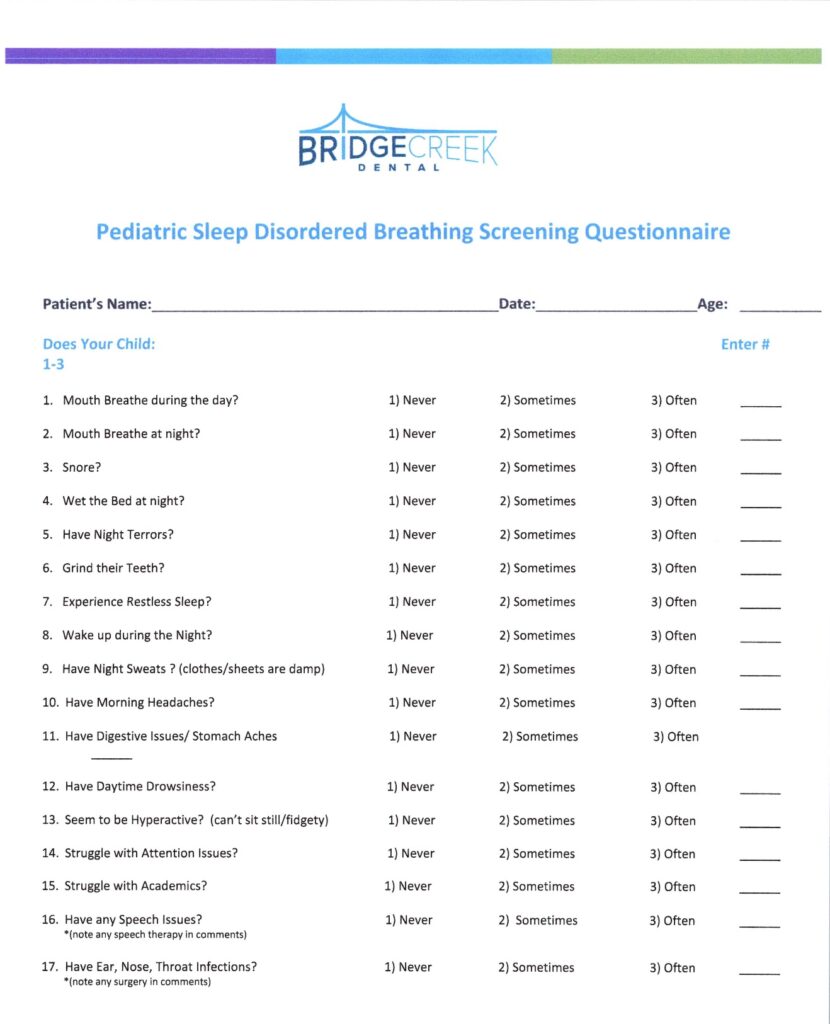
If you’re concerned about your child’s airway health or possible sleep apnea, we invite you to call and schedule an evaluation today. Print our Pediatric Sleep Questionnaire, fill it out, and bring it to the appointment
Print out our Pediatric Sleep Questionnaire, fill it out, and bring it to the appointment
What Is Airway Dentistry?
Airway dentistry focuses on how the structure and function of the mouth, teeth, and jaw influence breathing. A child’s airway can be affected by jaw development, tongue position, or even how they bite and chew. These factors can contribute to nighttime breathing issues, snoring, or mouth breathing, all common signs of sleep-disordered breathing.
Airway dentistry can guide proper growth of the jaws and face through early intervention, helping children achieve:
- Improved oxygen flow during sleep
- Healthier craniofacial development
- Reduced risk of long-term sleep apnea
- Better focus and daytime energy
Our approach is rooted in prevention and function, identifying concerns early and guiding the airway to develop properly as your child grows.

Pediatric Airway Dentistry Treatments
We understand that every child’s airway and development are unique. That’s why our treatments are customized to their age, growth stage, and needs. For children ages 3–12, we focus on gentle, non-invasive airway dentistry methods that encourage natural growth and breathing patterns.
Treatment options may include:
- Growth Guidance Systems: To promote proper oral and airway development early in life.
- Collaboration with Sleep Physicians and ENT Specialists: Ensuring comprehensive care when medical evaluation or sleep studies are necessary.
Every child develops differently, which is why airway treatment should always be personalized. Bridge Creek Dental offers several growth-focused therapies that support healthy breathing and jaw development while children are still growing. More specific treatment options include:
Myobrace® Therapy
Myobrace® treatment focuses on correcting the habits that contribute to poor airway and facial development. Many children develop improper tongue posture, swallowing patterns, and mouth breathing habits that affect how their jaws and airways grow over time.
Myobrace® appliances are removable and designed to help children:
- Develop healthier breathing habits
- Improve tongue posture
- Encourage nasal breathing
- Support balanced jaw growth
- Reduce oral habits that affect development
When combined with guided exercises and routine monitoring, Myobrace® therapy can support healthier oral function and long-term airway stability.
Myofunctional Therapy
Myofunctional therapy uses exercises to strengthen and retrain the muscles of the tongue, lips, cheeks, and jaw. These exercises help children learn healthier breathing and swallowing patterns while supporting proper oral posture.
Children with airway concerns often benefit from myofunctional therapy because it can help:
- Improve tongue positioning
- Promote nasal breathing
- Strengthen oral muscles
- Support better swallowing habits
- Reduce mouth breathing patterns
This therapy is often used alongside airway appliances and orthodontic treatment to improve long-term treatment success.
Fixed Expanders and Jaw Development
Some children have narrow upper jaws or limited space in the mouth that contribute to airway restriction and crowded teeth. Fixed expanders are designed to gently widen the upper arch over time, helping create additional room for the tongue and improve airflow.
Expansion therapy may help:
- Increase nasal airway space
- Improve bite development
- Reduce dental crowding
- Support facial symmetry
- Encourage healthier jaw growth
Because children’s jaws are still developing, expansion treatment is often more effective when started early.
Clear Aligner Therapy for Growing Smiles
In some cases, clear aligner therapy may be recommended to improve bite alignment and oral development while supporting airway function. Proper tooth positioning and jaw alignment can influence tongue space, breathing patterns, and overall oral balance.
Clear aligners offer a comfortable and discreet treatment option for older children and teens who may benefit from orthodontic guidance as part of their airway treatment plan.
Healthy Start® and Tooth Pillow Appliances
Healthy Start® and other tooth pillow-style appliances are designed to gently encourage proper jaw positioning and healthier breathing during sleep. These soft, comfortable appliances are worn at night and may help guide oral development while improving airflow.
These appliances may help children who struggle with:
- Mouth breathing
- Snoring
- Poor sleep quality
- Crowded teeth
- Early jaw development concerns
- Sleep-disordered breathing symptoms
Because these treatments work alongside your child’s natural growth, they can often support both airway improvement and orthodontic development at the same time.
Why Airway Treatment Matters
Airway concerns rarely improve on their own. Without treatment, children may continue developing poor sleep habits, breathing dysfunction, and jaw growth problems into adulthood. Airway evaluations allow us to identify concerns during the most important years of facial and oral development.
Dr. Wassmer and Bridge Creek Dental combine advanced airway-focused training with personalized pediatric care to help children breathe better, sleep more comfortably, and grow more confidently.
Our goal is to support healthier development through proactive, non-invasive treatment options that focus on the root cause of airway concerns rather than simply masking symptoms.
Why Early Detection Matters
Early intervention can prevent chronic sleep issues from developing into larger problems. Children with untreated airway restrictions may experience:
- Poor sleep quality and morning fatigue
- ADHD-like symptoms or trouble concentrating
- Mouth breathing and dry mouth
- Teeth grinding (bruxism)
- Slower growth or weakened immunity
We help create a strong foundation for your child’s long-term health, behavior, and confidence by addressing airway development early.

The Effects of Sleep Apnea in Children
Sleep apnea doesn’t just affect adults; it can also impact children as young as 2 years old. Pediatric sleep apnea occurs when a child’s airway becomes partially or fully blocked during sleep, leading to disrupted breathing and poor rest. It can influence growth, behavior, and long-term health when left untreated.
Sleep apnea is most common in children between the ages of 2 and 8 years old. Up to 4 percent of children around the world have sleep apnea, but it is more difficult to detect in kids than in adults.
Some physical signs that your child might have sleep apnea are:
- Frequent night waking
- Loud, habitual snoring or noisy sleeping
- Restless sleep
- Mouth breathing during the day or night
- Enlarged tonsils
- Excessive sweating at night
- Headache in the morning
- Teeth grinding
- Difficulty focusing or ADHD-like symptoms
- Irritability or mood changes
- Dark circles under the eyes
- Crowded teeth or narrow dental arches
- Bedwetting past the typical age
- Daytime fatigue
Sleep apnea can cause many issues for children if it is left untreated. The biggest issues are slowed development, hyperactivity, and excessive irritability.
Our dentists at Bridge Creek Dental, Dr. Kyle Wassmer and Dr. Jacob Taylor, are experienced in identifying airway-related concerns in children and providing treatments that promote healthy development. We help children breathe better, sleep deeper, and grow stronger using advanced diagnostic tools and airway-focused dentistry.
How Can a Dentist Help?
If your child has sleep apnea, we’re here to help. Dr. Wassmer is a Kois-certified provider of Healthy Start®, which is an oral appliance that’s worn while sleeping.
A blocked airway is a common cause of pediatric sleep apnea. Healthy Start® helps open the airway while also guiding proper jaw development and improving tooth alignment to support healthier breathing and better sleep.
During routine dental visits, we look for signs of sleep-disordered breathing. If we identify any concerns, we’ll provide an at-home sleep test for further evaluation.
Once your child is diagnosed, we’ll create a custom Healthy Start® appliance and guide you and your child through using it and wearing it. Most children adapt quickly, and the results are worth it!
What Our Patients Are Saying
At Bridge Creek Dental, we measure our success by the difference our care makes in our patients’ lives. Parents often come to us after months, or even years, of searching for answers about their child’s sleep and behavior.
Through airway-focused evaluation and gentle, growth-guided treatment, they finally see real improvement in their child’s energy, focus, and well-being. Their experiences reflect our ongoing commitment to precision, education, and results that truly matter.
Frequently Asked Questions
We understand that learning about pediatric sleep apnea and airway development can raise a lot of questions for parents. Every child’s situation is different, and it’s not always easy to know what signs are important or what treatment may be needed.
Below are some of the most common questions we hear from families, along with clear answers to help you feel more informed and confident about your child’s next steps.
How do I know if my child has sleep apnea?
Common signs include snoring, restless sleep, mouth breathing, bedwetting, and daytime irritability. If you notice these symptoms, schedule an evaluation with our dental team today.
Is treatment painful or invasive?
No. Most pediatric airway treatments are comfortable and designed to work naturally with your child’s growth.
Can dental treatment really improve sleep?
Yes. By guiding jaw development and supporting nasal breathing, airway dentistry helps reduce obstructions that interrupt sleep.
At what age is it best to begin treatment?
Ages 3–12 are ideal because the bones and airway are still developing, making early guidance highly effective.
We at Bridge Creek Dental believe proper breathing is the foundation of whole-body health. Our team uses advanced technology and airway-focused care to help children thrive, awake and asleep. Schedule a pediatric airway consultation today to give your child the restful sleep and healthy future they deserve.
Support Your Child’s Sleep and Health
Help your child have a good night’s sleep and good health by consulting with our dentists if you suspect sleep apnea. Our Bridge Creek Dental dentists are passionate about helping children live happy and helping lives. Give our office a call today to visit with a dentist certified in pediatric sleep apnea treatment.
Meet the Doctors

Dr. Jacob M. Taylor
Dr. Jacob Taylor is passionate about helping patients feel comfortable, informed, and confident in their dental care. With advanced training in implant placement, implant restoration, oral surgery, and complex restorative dentistry, he is able to provide thoughtful solutions for a wide range of dental needs. Dr. Taylor enjoys continuing to learn, building lasting relationships with patients, and helping families achieve healthy, functional, and natural-looking smiles.
Dr. Kyle B. Wassmer
Dr. Kyle Wassmer is dedicated to providing comfortable, high-quality dental care while helping patients feel well-informed and at ease throughout their visits. He pursues continuing education each year to stay current with modern dental techniques, technology, and treatment options. With a caring and patient-focused approach, Dr. Wassmer helps individuals and families in Billings maintain healthier, more confident smiles.
